
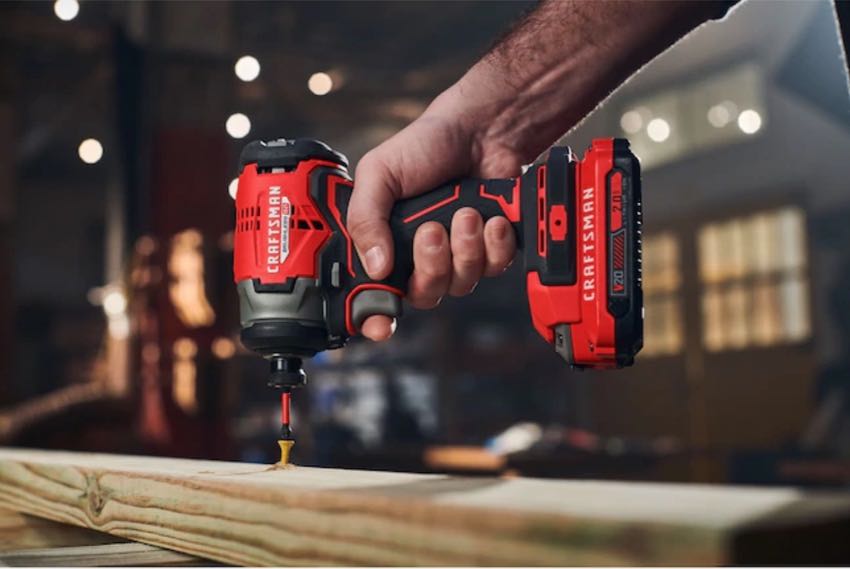
A first drill has one job before it ever touches wood: it has to make the owner feel willing to start. The cordless drill driver has become the tool many new homeowners, renters, and weekend fixers reach for because it feels capable without acting like a jobsite machine. That matters in the USA, where small home fixes often sit undone because the tool aisle feels louder than the problem. A shelf bracket, a loose cabinet hinge, a flat-pack desk, a garage hook, or a pilot hole in pine does not need drama. It needs a tool that starts clean, grips well, and does not punish a beginner for learning. Craftsman’s V20 line also benefits from something less flashy than raw power: shelf familiarity. People see it at big-box stores, notice the battery-and-charger kits, read coverage of practical consumer tool trends, and feel they can buy in without joining a trade. That is the real pull here. This drill is not winning attention because it is the strongest option on the wall. It is winning because it lowers the cost of doing the first project.
Why the Cordless Drill Driver Became the First Tool Buyers Trust
The first tool in a home kit carries more weight than its size suggests. It is the thing you grab when the towel bar slips loose, when the crib needs assembly, when a wall anchor refuses to seat, or when a neighbor asks for help hanging a mirror. A beginner does not want a tool that demands a lecture. They want a tool that gives clear feedback in the hand and does not turn a five-minute task into a confidence test. That is why the middle of the tool aisle is often more useful than the locked glass case. The best starter choice is not the loudest one. It is the one that makes the next task feel close enough to try.
The learning curve is short, but the ceiling is not
A basic V20 drill works because the controls make sense fast. You get a trigger, a clutch ring, a forward-reverse switch, a keyless chuck, and a speed selector. None of that needs a contractor vocabulary. Turn the clutch lower for small screws. Raise it when the screw stalls. Use the slower setting when control matters. Use the faster setting when drilling clean holes in softer material.
That simple layout matters more than many buyers admit. The first mistake most beginners make is not buying too little power. It is using too much force. They strip screw heads, sink fasteners too deep, or let the bit skate across painted trim. A clutch can save the project and the mood. It makes the tool teach you without sounding like a teacher. After a few jobs, you start to hear the difference between a screw biting cleanly and one fighting the material.
There is also room to grow. The same entry level drill that assembles a bookcase can drill pilot holes for deck screws, install cabinet pulls, mount pegboard in a garage, or help build raised garden beds. It will not replace a hammer drill for concrete or an impact driver for long structural screws. That boundary is healthy. A first tool should stretch your skill without lying about its limits. You learn where finesse ends and where a second tool begins.
Why an entry level drill can feel more useful than a premium one
The odd truth is that a lighter, simpler drill often gets used more than a stronger one. A premium tool may win on speed, torque, and runtime, yet spend more time sitting in a drawer because it feels like too much for ordinary work. New users pick up the tool that feels safe. That is where an entry level drill earns loyalty.
Think about a renter in Phoenix hanging blackout curtains before summer heat builds. They may need pilot holes, wall anchors, and a few careful screws near window trim. A heavy tool with aggressive torque can feel risky. A more approachable drill gives enough power while letting the user slow down. The project finishes cleaner because the person holding the tool stays calm. That calm has value. It keeps your hand steady when the bit first touches the wall.
This is why popularity in beginner tools rarely follows the same logic as pro-tool rankings. Pros value speed because time is money. Homeowners value recovery because mistakes cost confidence. The Craftsman V20 drill sits in that softer space. It is less about peak numbers and more about making common tasks feel possible on a Saturday morning. A tool that gets used twice a month beats a stronger one that makes you nervous.
What the Craftsman V20 Setup Gets Right for Homeowners
Once a beginner gets past the first trigger pull, the tool has to fit real home life. It needs to sit in a kitchen drawer, garage cabinet, laundry-room shelf, or small apartment closet. It also needs to work months after purchase, when the next project appears with no warning. This is where the kit format and battery system carry much of the appeal. The common starter buyer is not building a trailer deck at sunrise. They are fixing one annoying thing after dinner, then finding three more jobs once the tool is already out.
The 1/2-inch chuck matters more than beginners expect
A 1/2-inch chuck may sound like a spec buried on the box, but it changes how flexible the tool feels. It allows a wider range of common bits than smaller chuck designs. That helps when you move from tiny pilot holes to spade bits, countersink bits, hole saw arbors, or larger twist bits used for basic wood projects. It also means your first accessory kit has room to grow instead of dead-ending after two jobs.
For a homeowner in Ohio building garage shelves, this matters. One moment they are driving screws into studs. The next, they are boring holes for cable pass-throughs or drilling pilot holes in thicker lumber. A smaller chuck can become the first limit they notice. The larger chuck gives the drill more breathing room without making the tool feel exotic. A keyless design also helps when you are swapping between a drill bit and a driver bit over and over.
The non-obvious benefit is buying fewer workarounds. Beginners often waste money on adapters, odd bit sets, or second tools because their first purchase boxed them in. A wider chuck range keeps the setup plain. Plain is underrated. It means the user spends more time finishing the job and less time standing in the aisle trying to decode packaging. A boring spec can turn into fewer half-finished projects.
The V20 battery platform turns one purchase into a small system
The V20 battery platform is one reason buyers treat the drill as a doorway instead of a one-off purchase. Once a battery and charger are already in the house, the next bare tool feels less expensive. A small light, sander, inflator, or saw can make more sense when it shares the same pack. That does not mean every buyer should collect tools fast. It means the first kit has a path.
Battery sharing also changes how people plan projects. A garage wall organizer, a patio planter, and a loose gate latch no longer feel like separate tool problems. They become weekend tasks inside one system. For beginner DIY tools, that mental shift is powerful. The kit starts as a drill, then slowly becomes the base of a home-repair routine. You stop asking, “Do I own the tool for this?” and start asking, “Do I have the right bit and enough time?”
There is a catch worth naming. Battery platforms create loyalty, and loyalty can become tunnel vision. If a future project demands a higher grade tool, the battery you own should not trap you into the wrong purchase. The smart move is to treat the V20 setup as a practical home lane. Stay in that lane for household repair, assembly, light woodworking, and maintenance. Step out when masonry, daily trade work, or heavy framing enters the picture.
Where the Tool Fits in Real American Home Projects
A drill becomes popular when people can picture the next use before they buy it. The Craftsman V20 drill has that advantage because its jobs are ordinary. Not small. Ordinary. A loose handle, new blinds, a bike rack, a baby gate, a door hinge, a closet rod, a storm-door closer, a workbench top. These are the repairs that make a house feel cared for. They also appear in different homes across the country, from a rented Atlanta duplex to a split-level house outside Minneapolis. It is the kind of purchase that fits between home tool kit basics and the first real weekend build. The tool’s appeal is not one perfect project. It is the number of dull, useful jobs it can make less annoying.
Apartment repairs, garage jobs, and weekend builds
For apartment living, the value is control. You may be working close to painted walls, thin trim, hollow doors, or landlord-approved anchors. A drill that can start slowly helps keep holes neat. It also helps with furniture assembly, where cheap screws and particleboard can turn rough fast. Low speed and a modest clutch setting are your friends. They protect the material from your nerves.
In a garage, the same tool feels more open. You can hang ladder hooks, mount a battery organizer, install pegboard, or predrill holes for a storage rack. None of those jobs sound dramatic, but each one removes friction from daily life. A clean garage is often built one small bracket at a time. When the drill is easy to grab, those brackets stop being a “someday” job.
Weekend builds ask for a bit more judgment. If you are making a simple planter box in North Carolina or a basement shelf in Michigan, the V20 drill can handle pilot holes and driving screws in common softwood. If the project shifts into thick treated lumber and long lag screws, an impact driver may be a better partner. Knowing that difference is not a knock on the drill. It is how you avoid blaming the wrong tool. The more you build, the more you respect fit over force.
Beginner DIY tools work best when they reduce hesitation
The best beginner DIY tools do not turn new owners into experts overnight. They remove the pause before starting. That pause is where home projects die. You notice the loose hinge, then think about the noise, the mess, the wrong bit, the stripped screw, and the risk of making things worse. Suddenly the job waits another month.
A friendly drill interrupts that pattern. It says, in effect, start with one hole. Use painter’s tape to mark depth. Drill a pilot hole before driving the screw. Keep a scrap piece of wood nearby to test the bit. These tiny habits change the whole experience. Skill arrives through low-risk repetition, not one heroic project. The first clean hole teaches more than ten tool reviews.
The counterintuitive part is that confidence often comes from limits. A beginner tool that does not pretend to be a rotary hammer, framing driver, and shop drill in one body helps the owner choose reasonable work. Reasonable work gets finished. Finished work builds trust. Trust creates the next project. That cycle matters more than owning the highest-spec tool in the neighborhood.
How to Buy, Use, and Outgrow It Without Regret
Buying a starter drill should not feel like decoding a mechanic’s exam. The key is to match the tool to the work you will do in the next year, not the fantasy project you might attempt someday. A Craftsman V20 kit makes sense when your list includes assembly, repairs, shelves, curtain rods, garage storage, and light builds. It makes less sense if your main goal is drilling concrete, mixing mortar, or running large fasteners all day. Buy for your real calendar. Readers comparing it against a beginner power tool buying guide should ask one plain question: what will I fix in the next 90 days? The right drill is the one that fits the projects already waiting in your house.
What to check before you add it to cart
Start with the kit contents. A battery and charger matter because they decide whether the tool works the day it arrives. Some listings are tool-only, which can be a good deal for people already in the V20 battery platform. For first-time buyers, tool-only can turn into a surprise expense. Read the box details before chasing the lowest price.
Next, check the battery size. A 1.5 Ah pack keeps weight down and suits short household tasks. It is not meant to feel endless. If you plan to build several shelves, assemble outdoor furniture, and drill rows of pilot holes in one afternoon, a second battery helps more than a fancier bit set. Runtime anxiety can ruin a simple project. Nothing kills momentum like stopping halfway through the fourth bracket.
Also look at the chuck, speed settings, and LED placement. The LED sounds minor until you work inside a cabinet, under a sink, or in a dim garage corner. A two-speed gearbox gives better control across tasks. Lower speed helps with screws and larger bits. Higher speed helps with smaller holes. These are not bragging points. They are comfort features. Comfort is what keeps a beginner from quitting early.
When to upgrade instead of blaming your technique
Sooner or later, a starter drill meets a job that feels wrong. That moment can teach you. If screws keep camming out in dense lumber, you may need better bits, pilot holes, or an impact driver. If masonry eats your bit and progress stalls, you may need a hammer drill and the right masonry bit. If the drill overheats during repeated heavy work, the project has moved beyond casual duty.
A real example: hanging shelves on drywall over wood studs is fair work. Mounting a heavy rack into concrete block in a Florida garage is a different task. The first job asks for careful layout and clean pilot holes. The second may ask for masonry drilling, anchors rated for the load, eye protection, and more patience. The tool did not fail. The job changed. That lesson saves money because you upgrade for a reason, not from frustration.
Safety belongs in this buying choice too. Read the manual, clamp loose material, wear eye protection, keep hair and sleeves clear, and stop when the bit binds. The OSHA hand and power tool safety guidance is written for workplaces, but the habits fit home garages as well. The boring rules are often the ones that keep a quick fix from becoming an urgent-care visit. A good project ends with the shelf level and your fingers fine.
Conclusion
The reason this Craftsman drill keeps showing up in beginner conversations is not mystery hype. It solves the first-tool problem with enough power, simple controls, familiar retail access, and a battery path that feels easy to understand. That mix is more valuable than a spec sheet race for most homeowners. A cordless drill driver should make you feel ready to fix the thing you already noticed, not pressure you into building a workshop overnight. Used with the right bits, steady hands, and realistic expectations, the V20 drill can cover a wide range of American home tasks without making the owner feel outmatched. It is not the final drill anyone will ever need, and that is fine. A good starter tool earns its place by getting used, not by winning arguments online. Buy it for the projects in front of you, learn its limits, and let each finished fix make the next one feel smaller.
Frequently Asked Questions
Is the Craftsman V20 drill good for first-time homeowners?
Yes, it fits first-time homeowners who need one tool for basic repairs, assembly, shelving, and light wood projects. The controls are easy to learn, and the battery kit format helps new owners start without buying separate power gear.
Can the Craftsman V20 drill handle wall anchors?
Yes, it can handle common drywall anchors when paired with the right bit size and steady pressure. The smarter move is to drill a clean pilot hole first, then drive the screw slowly so the anchor does not spin or tear the wall.
Is an entry level drill enough for garage shelves?
Yes, for basic garage shelves in wood studs, it can drill pilot holes and drive common screws. For thick lumber, long structural fasteners, or repeated heavy work, pairing it with an impact driver will feel faster and easier.
What battery size is best for home projects?
A 1.5 Ah battery is fine for short repairs and assembly. A 2 Ah or larger pack gives more breathing room for longer sessions. Many homeowners do better with a second battery than with a larger tool they rarely need.
Should beginners buy a drill kit or tool-only version?
A kit is usually better for beginners because it includes the battery and charger needed to start. Tool-only versions make sense for people who already own compatible V20 packs and want to save money on the bare tool.
Can this drill go through concrete?
No standard drill is the best choice for concrete. It may handle tiny holes in soft masonry with the right bit, but concrete work is better suited to a hammer drill. Using the wrong setup can overheat the tool and damage bits.
What bits should I buy with a starter drill?
Start with a basic drill-bit set, a driver-bit set, a countersink bit, and a small pack of masonry bits if you have brick or block walls. Better bits often improve results more than a more expensive drill.
How do I avoid stripping screws with this drill?
Use the correct driver bit, keep the tool straight, start slowly, and set the clutch low at first. If the screw still slips, drill a pilot hole or replace the screw. More pressure is rarely the clean answer.