
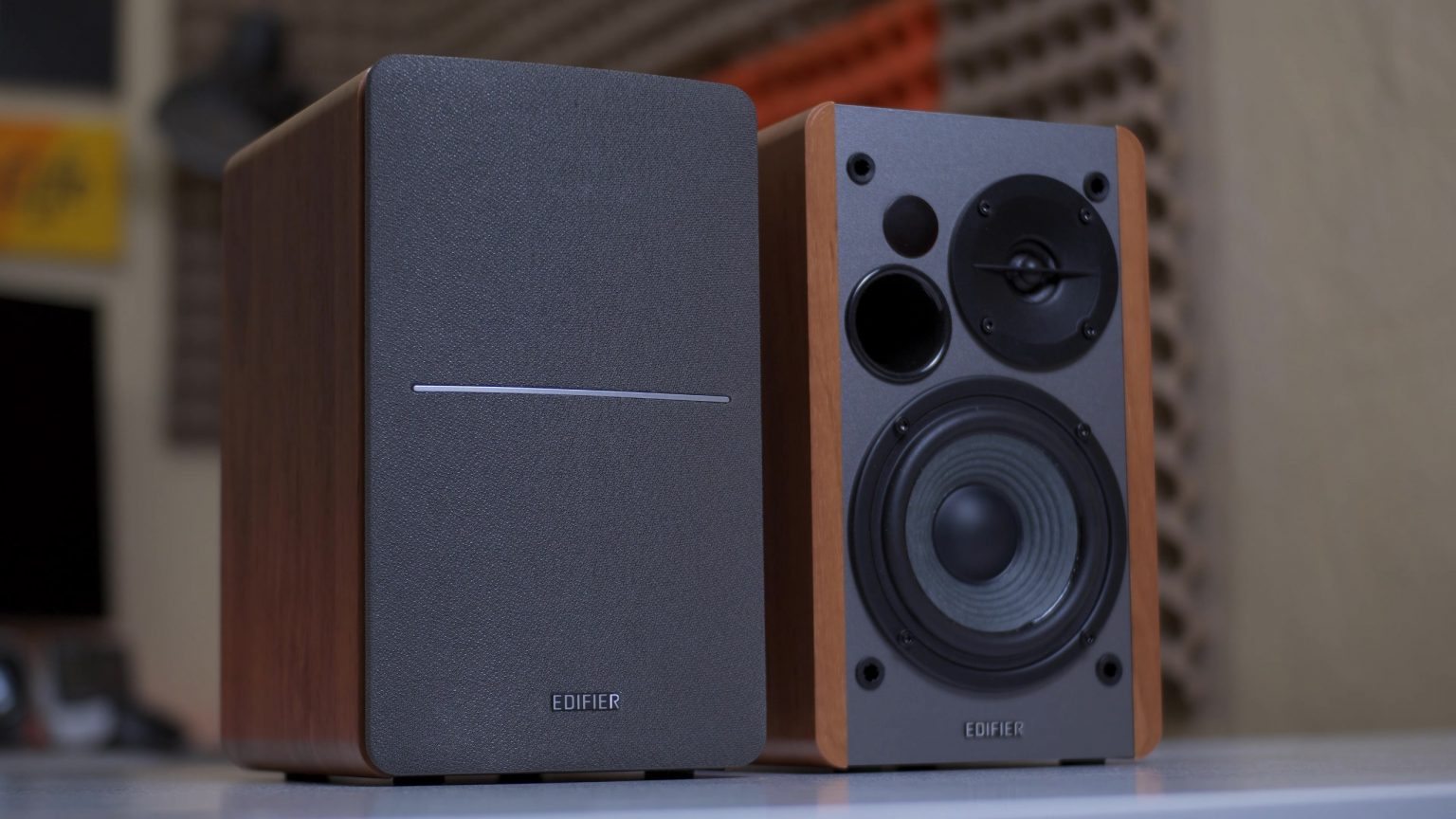
Most people do not fall into better sound through a $2,000 rack of gear. They get tired of thin laptop audio, muddy TV dialogue, or a Bluetooth cylinder that turns every song into background noise. The Edifier R1280DBs Powered Bookshelf Speaker lands in that exact gap, where curiosity meets a sane budget. For many U.S. listeners, it feels like the first grown-up audio buy that does not demand a receiver, a weekend of wiring, or a lecture from a forum veteran. That is why the buzz makes sense.
This pair gives you the bones of a proper listening space without asking you to rebuild your living room. You get real stereo separation, a wood-style cabinet, tone controls, a remote, and input options that fit modern life. Phone today. TV tonight. Turntable this weekend, if your record player has a built-in preamp. That mix is what makes budget audiophile speakers spread fast in dorm rooms, apartments, home offices, and starter media setups across the USA. For readers tracking practical gear trends through consumer tech and lifestyle updates, this is the kind of product that wins because it solves a daily annoyance, not because it shouts for attention.
Why the Edifier R1280DBs Works for First-Time Audio Buyers
The appeal starts with a simple truth: most people do not want an audio hobby at first. They want music to sound fuller, voices to sit forward, and movie nights to stop feeling trapped inside the TV. The friction comes when better sound appears tied to separate amps, passive speakers, banana plugs, and advice that changes depending on who answers first.
That is where this Edifier pair earns attention. It gives beginners a clean entry point. It is not a toy speaker, but it also does not punish you for being new. The mildly surprising part is that its limitations help. A fixed powered design can keep a new buyer from overspending on mismatched parts before they know what kind of sound they prefer.
A low-risk step away from plastic speaker sound
A cheap Bluetooth speaker can be fun at a cookout, but it collapses in a room where you sit and listen. Everything comes from one box. Stereo cues vanish. Bass often swells in one note, then disappears when the song needs texture.
The R1280DBs changes the experience by placing two cabinets apart. Put them on a desk with your monitor between them, or set them on each side of a small TV stand. Even before you adjust tone controls, you hear space. A guitar can lean left. A vocal can hold the center. A snare can feel less pasted onto the song.
That does not mean it performs like a studio monitor set costing several times more. It means the first upgrade is honest. For a college student in Austin, a remote worker in Ohio, or a renter in Queens who cannot mount speakers into walls, this kind of change matters because it is heard in normal rooms at normal volumes.
The non-obvious win is restraint. Many entry speakers try to impress with huge bass from a small cabinet. That thrill fades fast. A more controlled pair gives you a cleaner start, and clean is easier to live with than boomy.
Why budget audiophile speakers are often about habits, not specs
The phrase budget audiophile speakers sounds like a contradiction until you watch how people use them. A careful listener is not always chasing rare cables or massive towers. Often, they are learning better habits: placing speakers at ear height, leaving space between cabinets, and using a better source when it matters.
This is why the Edifier pair spreads through word of mouth. It rewards small changes. Move the speakers from the back corner of a desk to the front edge, and the sound tightens. Pull them away from a wall, and the bass becomes less cloudy. Angle them toward your chair, and vocals snap into better focus.
That learning curve is part of the value. A $99 speaker that hides every mistake can teach you nothing. A $1,000 system can make every mistake expensive. The R1280DBs sits in the middle, where the buyer can experiment without fear.
A common U.S. example is the small apartment living room where the TV sits on a media console and the couch is eight feet away. A soundbar may be tidier, but stereo speakers can make music feel more natural after the credits roll. That dual use is where many new listeners get hooked.
The Powered Bookshelf Speaker Advantage in Real Rooms
Once buyers understand why this Edifier model feels approachable, the next question is placement. Small rooms are not always easy rooms. Bedrooms, shared apartments, and home offices have hard desks, bare walls, low ceilings, and furniture that was chosen for space, not acoustics. A separate amp and passive pair may offer more freedom, but it also adds more chances to buy the wrong thing.
A powered pair cuts that mess down. The amplifier is already matched to the drivers. The controls are nearby. The remote handles daily use. Edifier’s official R1280DBs product page lists the model with Bluetooth, optical, coaxial, dual RCA, and sub-out support. The tradeoff is that you accept Edifier’s design choices. For many listeners, that is a fair deal.
Built-in amplification removes the first setup headache
Separate amps are not scary once you understand them, but they can scare off a beginner before the first song plays. You have to think about power ratings, inputs, desk space, speaker wire, and where the volume control will live. That is a lot for someone who wanted better Spotify playback after work.
The R1280DBs keeps the setup closer to a normal consumer product. One speaker powers the pair. The other connects with speaker cable. Then you choose an input and listen. It feels familiar enough that a parent buying speakers for a family room or a student setting up a dorm desk can get moving without calling a tech-minded friend.
This matters in American homes because the same gear often serves several roles. A pair might sit beside a work monitor from 9 to 5, then handle a PlayStation or TV at night. A separate system can do that, too, but it may take more boxes than the room can spare.
The counterintuitive point: fewer upgrade paths can lead to more listening. When there are fewer parts to swap, the owner spends less time second-guessing the system and more time learning what good placement and volume discipline can do.
Where Bluetooth bookshelf speakers fit into daily listening
Bluetooth bookshelf speakers win because they respect how people move through a day. A phone is still the source for many listeners. A laptop may take over during work. A TV may use optical input later. Nobody wants to unplug cables every time the room changes purpose.
The Edifier setup gives you that mix without turning the back panel into a puzzle. Bluetooth handles casual playback. Optical and coaxial inputs help with TVs and computers. RCA keeps older gear in the conversation. For someone building a desktop audio setup, that range can prevent the early regret of buying speakers that work for one device and fail the next.
There is a catch, and it is worth saying plainly. Bluetooth is convenient, but it should not be treated as magic. If you sit close at a desk and care about stable quality, a wired input can still make sense. The better habit is to choose the input based on use: Bluetooth for quick listening, optical for TV, RCA for a turntable or dedicated source.
That kind of flexibility explains why the model has life beyond one trend cycle. It fits the messy way real people listen. Clean product design is not only about looks. It is about not making the owner solve the same problem twice.
Sound Character, Bass, and the Subwoofer Question
After setup, the real test begins. A speaker can look good in photos and still lose you after three songs. The R1280DBs has gained traction because it offers a warm, easy profile that flatters common listening habits. It does not chase a sterile studio feel. It aims for comfort, and that choice is smarter than it may appear.
Comfort is not the same as dullness. It means the speaker can play indie rock, hip-hop, podcasts, YouTube, jazz, and TV dialogue without turning one category into a punishment. The tension is bass. Small cabinets cannot bend physics. Anyone expecting deep theater rumble from a compact pair will learn that fast.
Why warm tuning can beat fake detail
Some budget speakers push treble forward to create the feeling of detail. At first, that can sound exciting. Cymbals sparkle. Vocals seem sharper. Then fatigue sets in. You lower the volume because the sound feels busy, not because it is loud.
The Edifier tuning leans friendlier. That suits long sessions, especially near a desk. A remote worker editing spreadsheets in Phoenix or a student taking notes in Boston may listen for hours at low to medium volume. A speaker that avoids sharp glare can be the better companion, even if it does not win a five-minute showroom comparison.
This is a point many new buyers miss. The most impressive speaker in the first song is not always the one you want on a Tuesday night. Smooth balance can feel less dramatic, but it keeps music in the room longer.
For budget audiophile speakers, that is a serious advantage. A starter system should invite listening, not demand constant tweaking. If you find yourself playing one more album instead of reading another spec chart, the speaker is doing useful work.
When the sub-out becomes the hidden upgrade path
The subwoofer output is one reason the R1280DBs stands apart from simpler Edifier models. Bass is the one area where small speakers run out of room first. A sub-out lets the owner add low-end weight later instead of replacing the whole pair.
This does not mean every buyer needs a sub on day one. In a small bedroom or apartment, adding bass too early can create more problems than it solves. Walls shake. Corners boom. Neighbors notice. The wiser move is to live with the speakers first, then decide what is missing.
The hidden advantage is timing. A buyer can start with a compact system, learn the room, then add a modest subwoofer when the need is clear. That path works well for a desktop audio setup because the main speakers handle near-field clarity while the sub fills the bottom carefully.
A real example: a listener using the Edifiers beside a 27-inch monitor may feel happy with music but underwhelmed by action movies. In that case, the sub-out gives the setup a second life. The system grows when the room asks for it, not because a sales page pushed the idea.
Who Should Buy It, Who Should Skip It, and How to Set It Up
A viral product can tempt the wrong buyer. That is where honesty helps. The R1280DBs is not the right answer for every room, every ear, or every future plan. Its strength is not raw power. Its strength is making better stereo sound easy enough that people use it every day.
This final buying lens matters because American homes vary wildly. A small Brooklyn bedroom, a suburban den in Georgia, and a garage workspace in Colorado do not need the same speaker behavior. The same pair can feel generous in one space and small in another.
The best fit is a practical listener with a mixed-use room
The strongest buyer is someone who wants one neat system for music, desk use, and casual TV. That person values tone controls, a remote, and several inputs more than a long upgrade ladder. They may care about sound, but they do not want audio gear to take over the room.
This is also a good match for renters. You can place the speakers on furniture, pack them during a move, and avoid drilling or fishing wire through walls. For anyone building around a laptop, monitor, turntable with preamp, or bedroom TV, the convenience is hard to ignore.
Bluetooth bookshelf speakers also suit households where different people use the same room. One person can stream from a phone. Another can watch TV through optical. Someone else can plug in an older source. That shared use gives the speaker more value than a single-purpose gadget.
The skip list is clear. If you want chest-hit bass, theater volume in a large open room, or a deep path into separate amps and passive speakers, start elsewhere. The Edifier pair is a smart first step, not a final boss.
Placement and small tweaks matter more than people think
Setup can make or break this pair. Do not shove the cabinets to the back of a shelf and expect clean stereo. Give them room to breathe. Put the tweeters near ear height when possible. Spread them apart, then angle them toward your seat until the center image feels locked.
A desk setup needs care. If the speakers sit flat on a hard surface, bass can thicken and the image can blur. Small isolation pads or stands can help more than a new cable. Keep the speakers away from corners if the room already sounds heavy.
Tone controls should be used like seasoning. A small bass lift at low volume can feel pleasant. Too much can smear kick drums and male voices. Treble can add presence, but a heavy hand makes long listening tiring. Make one change, listen for a day, then decide.
For a starter desktop audio setup, this patient approach beats constant shopping. The speaker may be the purchase, but the room is the partner. Get that part right and the Edifier makes far more sense than its size suggests.
Conclusion
The strongest case for the R1280DBs is not that it defeats every rival. It does not. The stronger case is that it understands the first serious audio upgrade better than many products around it. People want richer music, clearer dialogue, easy switching, and a system that looks at home beside a monitor or TV.
That is why the Edifier R1280DBs Powered Bookshelf Speaker has found so much attention among budget-minded listeners. It gives enough control to feel personal, enough inputs to stay useful, and enough restraint to avoid the cheap tricks that make some speakers tiring after a week.
The smarter move is to buy it for the right job. Use it in a bedroom, office, dorm, or modest living room. Place it with care. Add a sub later only if the room and your habits call for it. For more practical gear guidance, you can explore home audio buying tips and budget tech setup ideas before building the rest of your space.
Good audio should pull you back into listening, not push you into confusion. This Edifier pair does that with rare calm.
Frequently Asked Questions
Is the Edifier R1280DBs good for a small apartment?
Yes, it fits small apartments well because it gives you real stereo sound without a receiver or wall-mounted setup. Keep the speakers away from tight corners, use moderate volume, and avoid adding a subwoofer until you know your room can handle more bass.
Can I connect the Edifier R1280DBs to a TV?
Yes, it can connect to many TVs through optical or coaxial output, depending on what your TV provides. That makes it useful for clearer dialogue and fuller movie sound. Check your TV audio menu after setup, since some models require PCM output.
Do I need an amplifier for the Edifier R1280DBs?
No, the amplifier is built into the speaker system. That is part of its appeal for beginners. You connect your source, power the main speaker, link the second speaker with the included cable, and control volume from the side panel or remote.
Is the Edifier R1280DBs better than a soundbar?
It depends on your use. For music, two separate speakers often create better stereo space than a basic soundbar. For TV-only use, a soundbar may look cleaner. The Edifier makes more sense when music, desktop use, and TV all matter.
Can I use the Edifier R1280DBs with a turntable?
Yes, if the turntable has a built-in phono preamp or you add an external phono preamp. The speakers accept RCA input, but they do not replace the phono stage needed by many traditional turntables. Check your record player before buying extra gear.
Does the Edifier R1280DBs have enough bass?
It has enough bass for near-field listening, bedrooms, offices, and modest living rooms. It will not feel like a home theater subwoofer. The sub-out is useful because you can add a sub later if movies, hip-hop, or games need more low-end weight.
What is the best placement for Edifier R1280DBs speakers?
Place them near ear height, spread apart, and angled toward your seat. Avoid deep shelves and tight corners when possible. On a desk, small stands or isolation pads can reduce surface vibration and help vocals sound clearer.
Are Bluetooth bookshelf speakers good for serious listening?
They can be, especially for daily listening where ease matters. For close, careful sessions, a wired input may give steadier quality. The best approach is simple: use Bluetooth when convenience wins and use optical or RCA when you want a more stable connection.